PROCESS PIPELINE SERVICES
At HYDROTORC, we excel in every aspect of the pipeline industry, including repairing, expanding existing systems, and manufacturing new ones. We provide end-to-end engineering and project execution services that empower our clients to construct or expand pipeline systems, compressor and pump stations, terminals, underground and surface storage, and infield gathering and production facilities.
LUBE OIL FLUSHING
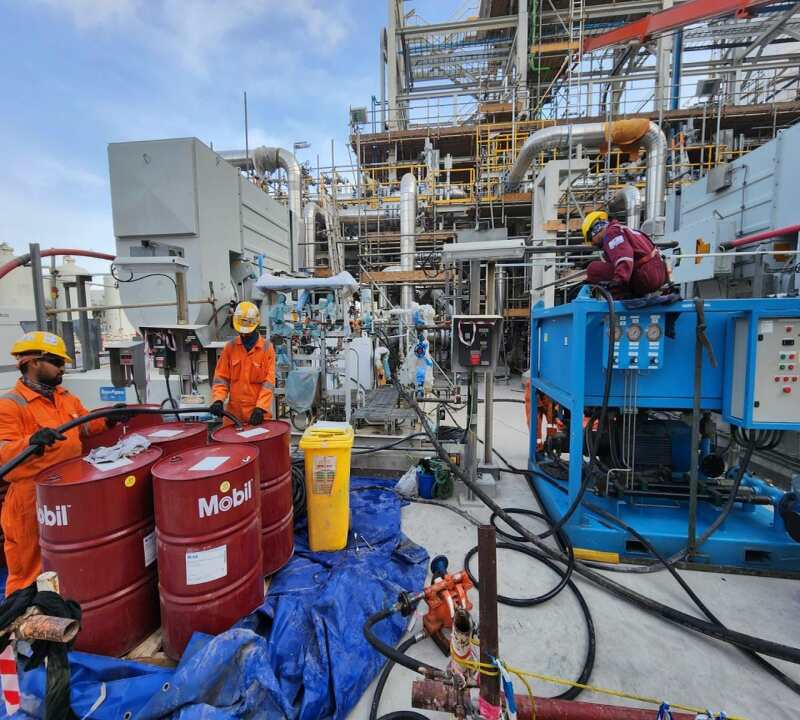
Oil flushing services are used to extend the life cycle of hydraulic/lubrication systems during commissioning, periodic maintenance and repair services.
Flushing of hydraulic and lube oil system is employed to ensure that new rotating and hydraulic equipment will start up and operate with full efficiency and prevents premature failure. HYDROTORC is dedicated to reduce equipment maintenance and operating cost by removing damaging particulate from lubrication and Hydraulic system for maximum reliability and economic system performance.
Sources of contaminations: New constructions are more susceptible to sever contaminations such as rust, scale, slag, sand, dirt, etc. all leading to failure of even the most well designed systems. Contaminants trapped in bearing races, rotating equipment causing significant damage. Particles as small as five microns in size can cause significant damage if allowed to remain or become trapped in the process system and create more contamination as existing contaminants create more contaminants because of a chain reaction.
Routine system maintenance on valves, filters, pumps etc. can ingress damaging level of particulate contaminations if proper care is not taken during process HYDROTORC can assess a system cleanliness level using oil samples and inputs from customer regarding system performance, maintenance and operating conditions, the system then can be flushed to predetermine cleanliness class (ISO4406/ NAS1638). A clean system can keep equipment running longer and better for years to come.
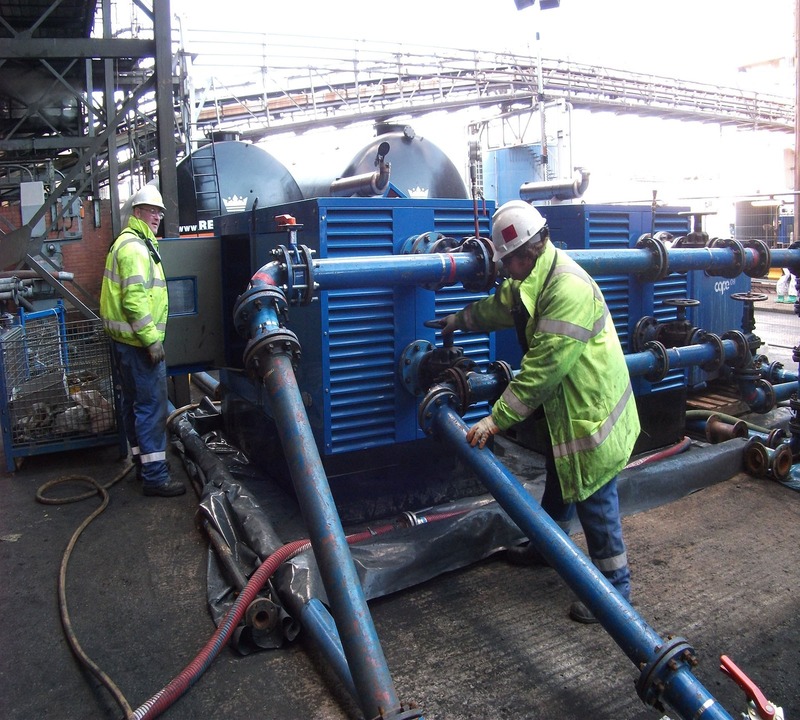
Applications for flushing include:
- Hydraulic control systems
- Marine vessel’s Hydraulic, Lube and fuel oil system
- Steam & Gas Turbines lube systems
- Steering, winches and crane Hydraulic system
- Subsea control lines
- Compressor lube oil system cleaning
CHEMICAL CLEANING
Chemical cleaning is required during pre-commissioning or post commissioning activities and generally applicable during regular shut down work.
Chemical cleaning has long been regarded as the most efficient and least disruptive method for cleaning piping and cooling water systems, boilers and tanks. Chemical cleaning is required on new build systems to ensure that residual contamination and excess depositions such as scale, welding scale, corrosion, sand, temporary protective coating, any other construction debris, oil and grease do not contaminate fluid in the piping or cause severe damage to rotating machinery or valves. Existing piping systems in service that are affected by contaminants, organic and inorganic scales, may in time reduce flow rates or affect heat transfer. HYDROTORC can provide the most technically advanced, cost-effective chemical cleaning solution with its various capacity fleet of chemical cleaning equipment’s and portable laboratory.
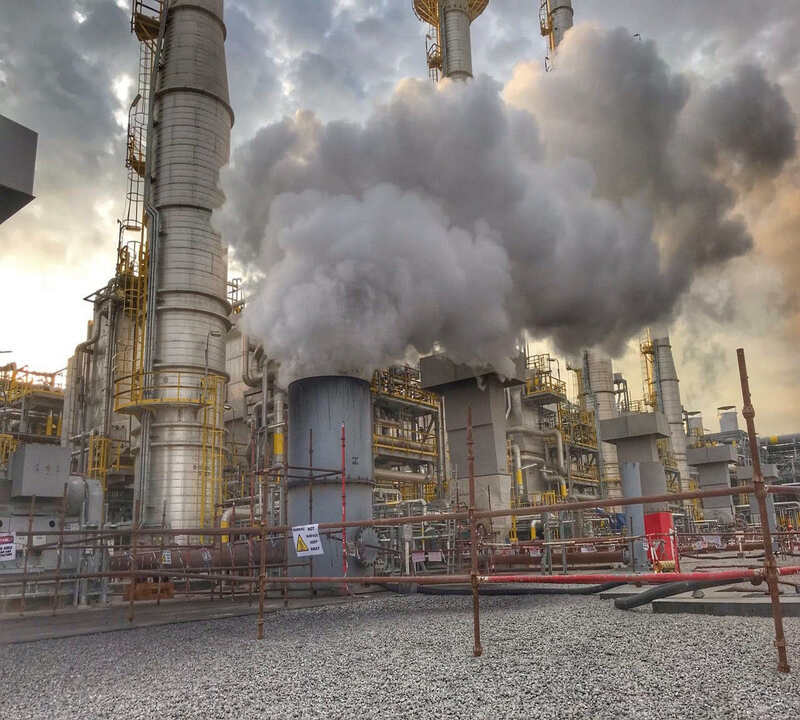
Steps involved in chemical cleaning procedure:
- Degreasing; Pickling; Passivation; Neutralization; Drying
Surface treatments / Cleaning:
- chemical cleaning of SS, MS & CS pipes at marine vessels
- Pickling and passivation of steel structures, spools.
- Chemical treatment of heat exchangers
- Cleaning of vessels (steam cleaning, HP water jet cleaning)
- Anti-corrosion Treatments
STEAM BLOWING
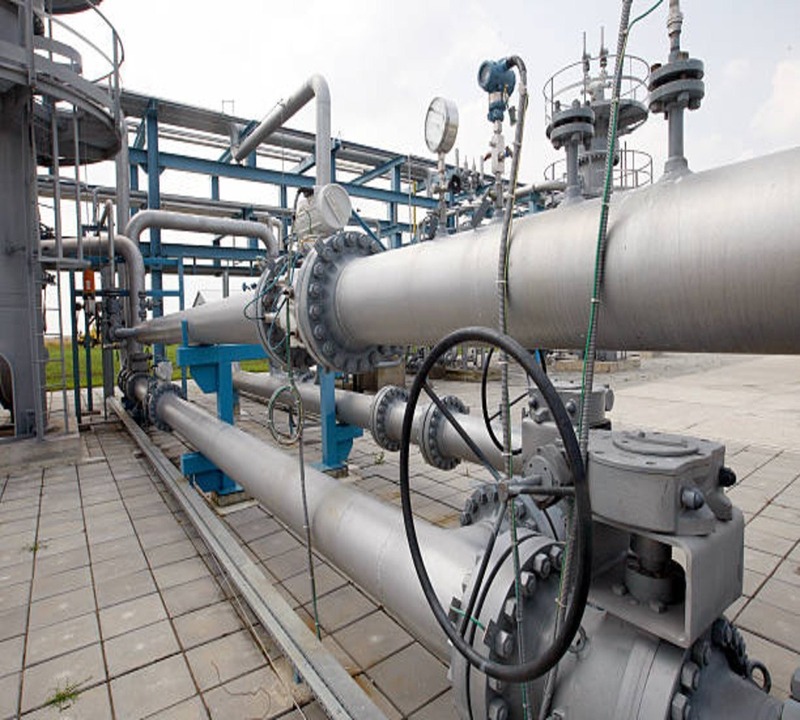
Effective in the removal of construction debris, weld slag, sand, oil, dust, rust and mill scale from critical systems prior to plant start-up.
We optimize our steam blows with quality engineering, and by utilizing the best equipment. Determining pipe sizing and design, pipe routing, steam conditions, noise level, thermal cycling, water quenching, and condensate generation are all factors that—with our proper planning—will ensure a successful steam blow operation.
Why Perform Steam Blowing
When pipe is fabricated during hot working, a heavy oxide layer forms. This layer is known as mill scale and must be removed from critical systems before putting them into service.
Over time, enhancements have been made in plant start-up techniques to perform engineered steam blows that remove mill scale. During a steam blow, the piping is blown with sufficient boiler pressure to ensure that enough dynamic pressure will be experienced in the pipe to provide adequate cleaning.
During any plant start up, there’s a possibility that particles left in the pipe from the construction phase could break loose and travel downstream. These particles can damage instrumentation and impede other plant operations. Typically, boiler pressures used in steam blowing provide a dynamic pressure throughout the piping that is at least 20% higher than would be experienced in normal operating conditions (CFR ≥ 1.2). Any potentially damaging particles will be blown out of the piping prior to plant operation.
The time taken for an object to travel through the system and be ejected cannot be calculated. Instead, a technique of detecting particles in the emerging steam blow is used. This technique checks the emerging steam for particles impacting on a polished metal plate (commonly known as a target).
The steam blow method is similar to the exhaustive air blow technique, but the boiler is fired to generate the pressurized steam used to clean the steam path. Specialized quick opening valves and a detailed procedure, along with the design of temporary spools, steam quenching devices, silencers, and debris containing equipment are required to perform this service.
Application:
- Removal of residual post-construction debris
- Unseating mill-scale magnetite layer deposits and welding slag through thermal pipe shocking
- Purging high, medium, and low pressure steam lines leading to end users, such as well pad injection points, steam traps, etc
- Commissioning of steam supply and distribution piping, including lines originating from traditional boiler and OTSG systems
- Cleaning of critical system piping leading to crucial components, such as steam turbine generators on cogeneration units
- Precautionary maintenance on older steam systems where contamination is suspected for major critical repairs have been conducted
NITROGEN PURGING SERVICES
What is Nitrogen Purging?
Nitrogen Purging and Inerting (LEL & Oxygen removing) is highly effective for pipeline purges, product displacement, and process pipeline Inerting.
Types include displacement purging, pressure-cycle purging, and vacuum-cycle purging.
Applications Include:
- Hydrocarbon tank inerting
- Refinery piping
- Refinery shutdowns
- Nitrogen purging for Sulphur Pit
Advantages:
- Nitrogen purging has significant advantages over water and air.
- Nitrogen is dry, clean and reduces oxidation.
- Nitrogen purging is an industry standard technique. It is used for the replacement of a hazardous or undesirable atmosphere with an inert dry atmosphere.